1 min read
PVC Roofing Membranes: Strengths, Costs, and Best Uses
Key Takeaway PVC roofing membranes are single-ply, heat-welded thermoplastic sheets that commonly last 20 to 30 years and excel when a flat or...
9 min read
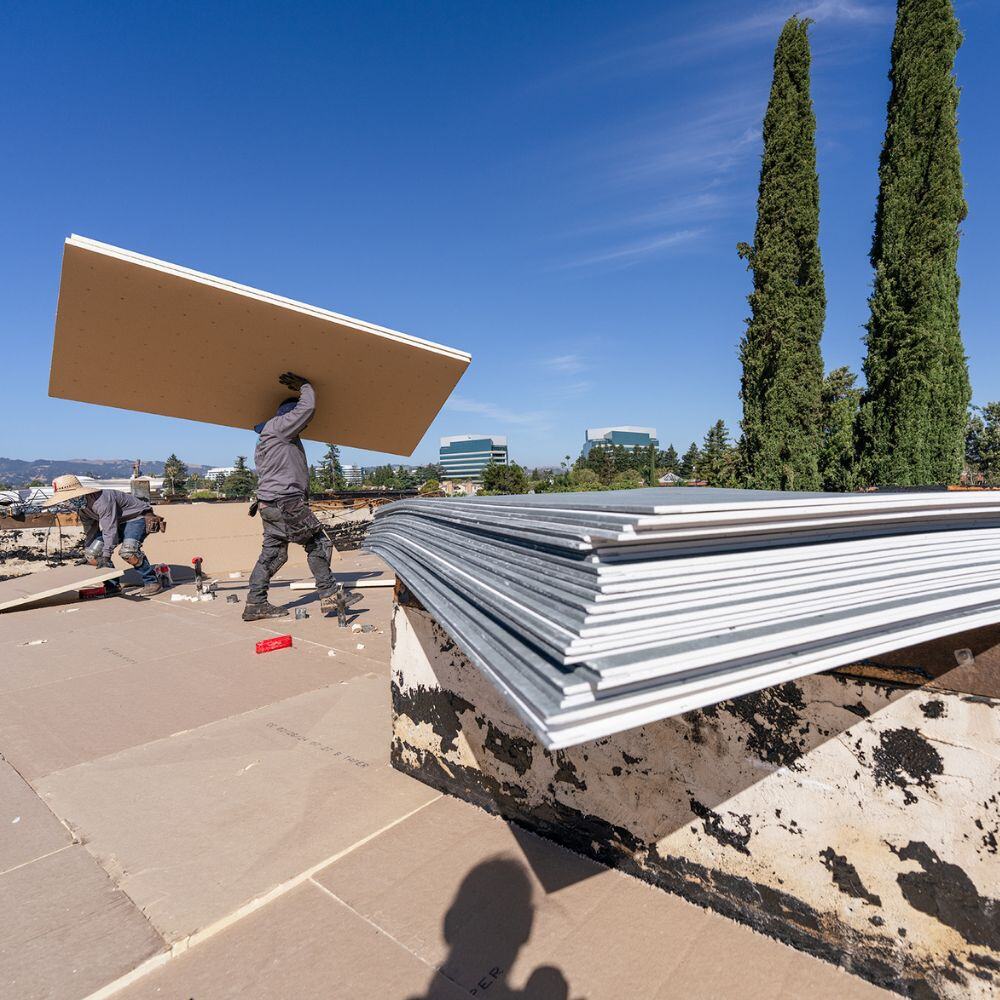
Key Takeaway
The main flat roofing systems differ by how they create a waterproof layer: single-ply membranes like TPO, PVC, and EPDM use large manufactured sheets, while modified bitumen and built-up roofing use asphalt-based layers. In Flat Roofing 101, understanding how the main systems differ matters because TPO holds about 40% of the low-slope market, EPDM around 22%, and each system suits different slope, drainage, and traffic conditions. No single system is universally best.
If three roofers looked at your flat roof and gave you three different recommendations, you're not imagining things. Flat roofs are genuinely confusing, and the acronyms don't help. Here's the short version: flat roofing systems differ mainly by how they create a waterproof layer. Single-ply membranes like TPO, PVC, and EPDM use large sheets. Modified bitumen and built up roofing use asphalt-based layers. Coatings and spray foam are usually restoration systems, not full replacements. Which one is right for your building depends on slope, drainage, sun exposure, rooftop traffic, code, and how well it's installed, not just the material name.
This guide is for the homeowner or building owner staring down a replacement or a serious repair, probably comparison-shopping and a little worried about being sold something. The honest answer up front: there's no single "best" flat roof. There's only the best fit for your roof. Let's make that decision feel manageable.
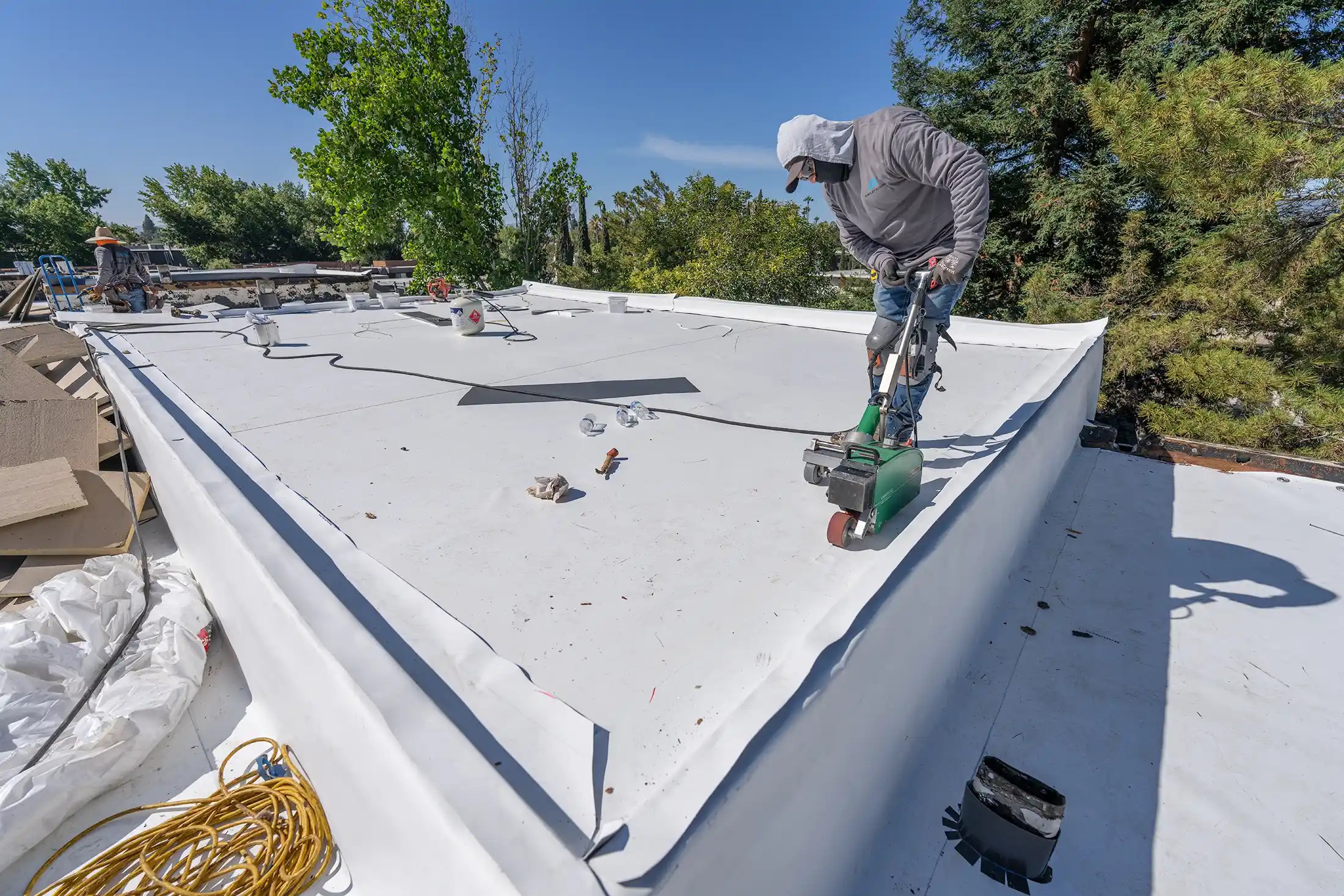
Almost no "flat" roof is truly flat. If it were, water would sit on it with nowhere to go. What people call a flat roof is really a low slope roof, built with just enough pitch to move water toward drains, scuppers, or gutters. Even a roof that looks dead level to the eye is usually designed with a slight fall across the roof surface.
How much slope? The 2024 International Building Code sets a common minimum design slope of ¼ inch of vertical rise per 12 inches of run, or about 2%, for many low slope roof applications. (There are exceptions for some replacement and recover work where the existing roof already drains and meets structural requirements.) Definitions vary depending on who you ask: IBC-related language treats low slope coverings as roofs under 2:12, while the National Roofing Contractors Association references define low slope as under 3:12.
The practical takeaway is simpler than the numbers. Below a certain slope, a roof can't rely on overlapping asphalt shingles to shed water. It needs a continuous roofing membrane bonded across the roof deck. That single fact is why every roofing system below exists.
Every acronym you'll hear really describes how the roof gets waterproofed and how the pieces join together. TPO roofs now make up roughly 40% of the low slope market, EPDM roofing accounts for around 22% of new construction, and built up roofing has been protecting buildings for over a century. Here's how the main roofing materials and the different types of flat systems compare.
| System | How it waterproofs | Seam / attachment | Typical strengths | Lifespan context |
|---|---|---|---|---|
| TPO | Single sheet of thermoplastic membrane | Heat-welded seams | Reflective surface, common on commercial buildings | Often 30 to 40 years with good install and care |
| PVC | Single thermoplastic sheet | Heat-welded seams | Chemical and grease resistance | Often 30 to 40 years |
| EPDM | Single sheet of synthetic rubber | Adhesive or tape seams | Flexible, long track record | Roughly 20 to 30 years maintained |
| Modified Bitumen | Reinforced asphalt sheets | Torch, self-adhered, or cold-applied | Puncture resistance, layered protection | Around 15 to 20 years |
| Built Up Roofing (BUR) | Alternating asphalt and felt plies | Hot-mopped layers | Redundant layers, proven longevity | Can exceed 20 years |
| Coatings / SPF | Liquid or foam applied over an existing roof | Adhered restoration | Extend a sound roof, add reflectivity | Depends heavily on substrate |
Metal roofs and green roofs sit alongside these as adjacent options for certain buildings. Concrete roofs also show up on some low slope structures where mass and fire resistance matter, though they carry heavy structural demands and place real load on the roof structure. Treat the lifespan numbers as ballpark, not promises. A well-maintained flat roof can reach 25 years or more, but real performance comes down to the install and the upkeep.
A single ply roof means what it sounds like: one layer of manufactured single ply membrane rolled out and secured across the roof. These are the systems you'll hear about most often, especially on commercial flat roofing.
TPO is a thermoplastic roofing membrane, which means its seams are heat welded together with hot air to form one continuous roof surface. It usually comes with a reflective white surface that bounces sunlight off the roof and helps with energy efficiency, a big reason TPO roofs hold about 40% of the low slope market. The material is covered by ASTM D6878. On the right building, it's a workhorse.
PVC roofing is also a thermoplastic single ply membrane with heat-welded seams, so it shares TPO's continuous-membrane advantage. Where it stands apart is chemical and grease resistance, which makes it a smart pick near restaurant exhaust or industrial venting that would degrade other membranes. It's specified under ASTM D4434.
EPDM, short for ethylene propylene diene monomer, is a synthetic rubber roofing membrane that's been on roofs since the 1960s. Instead of heat-welding, its seams are joined with adhesive or specialized tape, so the seam method is genuinely different from TPO and PVC. This EPDM rubber membrane is flexible, forgiving of building movement, and available in sheet widths from about 7.5 feet up to 50 feet, which means fewer seams on large open roofs. The EPDM Roofing Association is a good reference for how these assemblies perform. That single wide-sheet trait is a real advantage on big commercial buildings with few penetrations.
One point most guides skip: attachment method matters as much as the material. A single ply membrane can be fully adhered (glued down), mechanically fastened, or set in a ballasted system (weighted with stone). Two roofs can both be "TPO" and perform very differently depending on how they're attached, insulated, and detailed at the edges. When a contractor says "TPO," ask how it's going down.
Before membranes, roofs were waterproofed with asphalt. These systems are still specified on plenty of commercial buildings and older homes, and for good reason.
Modified bitumen roofs use asphalt reinforced with polymers and a fabric layer, delivered in rolls and typically finished with a cap sheet. Modified bitumen comes in SBS and APP families and can be installed torch-down, self-adhered, or cold-applied. If someone quotes you "torch-down," that's the same flat roof material family, just one installation method. The SBS polyester-reinforced version is specified under ASTM D6164. It's often the lower initial-cost option and handles foot traffic and punctures reasonably well thanks to its reinforcement, which makes it a common pick where crews will regularly walk the roof surface.
Built up roofing (BUR) is the classic "tar and gravel" roof. Crews build the system in the field with a hot mop, alternating plies of roofing felt and hot asphalt (some older specs used coal tar pitch), then finish it with a gravel surface. Those multiple layers create redundancy, so a small breach in one ply doesn't automatically flood the building. Built up roofing has been in use for over a century and can last well past 20 years, which is part of why it still appears on so many commercial buildings.
Comparing the two: BUR wins on layered redundancy and long service life but carries more weight and messier installation. Modified bitumen roofs are lighter, faster to install, and easier to spot-repair, though they usually have fewer plies. Both can be surfaced or coated to improve reflectivity, which matters more in hot climates.
.jpg?width=4000&height=3000&name=Copy%20of%20DJI_0663%20(1).jpg)
These options come up in flat-roof conversations, but they aren't right for every building, and a couple of them aren't replacements at all.
Roof coatings and spray polyurethane foam are restoration tools, not magic fixes. They work when the existing roof is structurally sound, dry, well-adhered, and already draining. Applied over a roof that's holding water or hiding wet insulation, a coating just seals in the problem. If a contractor pitches a coating as the cure for ponding or a failing roofing membrane, that's your cue to ask more questions.
Standing-seam metal roofing systems work on some low slope applications and can last 30 to 50 years with proper maintenance, though they're a different animal from membrane systems. Metal roofs are fire resistant and shed water well, and they can withstand high winds, which is part of their appeal in California. Green roofs, planted assemblies that absorb rainwater and reduce runoff, show up on modern buildings looking to manage stormwater and cut energy use. These rooftop gardens and green spaces can even add additional usable space to a property. They're effective, but heavier and far more complex to build and maintain. The honest rule for all of these: match the roofing system to the building instead of forcing a favorite onto every roof.
Here's the part most guides gloss over. Flat roof failure usually starts with drainage, seams, penetrations, and details, not "bad roofing materials." So the right system gets chosen after someone actually understands your roof. These are the factors that drive the decision:
Residential and commercial needs can diverge here too. A commercial flat roofing project loaded with equipment and tenants has different priorities than a home addition's low slope roof section. On residential properties, the calculus around price per square foot and disruption often looks different than it does in commercial construction. The National Roofing Contractors Association recommends inspecting a roof at least twice a year, ideally spring and fall plus after severe weather, which keeps small issues small. If your estimates all look different, this is why. Ask each contractor why they recommend a system, not just what it is.
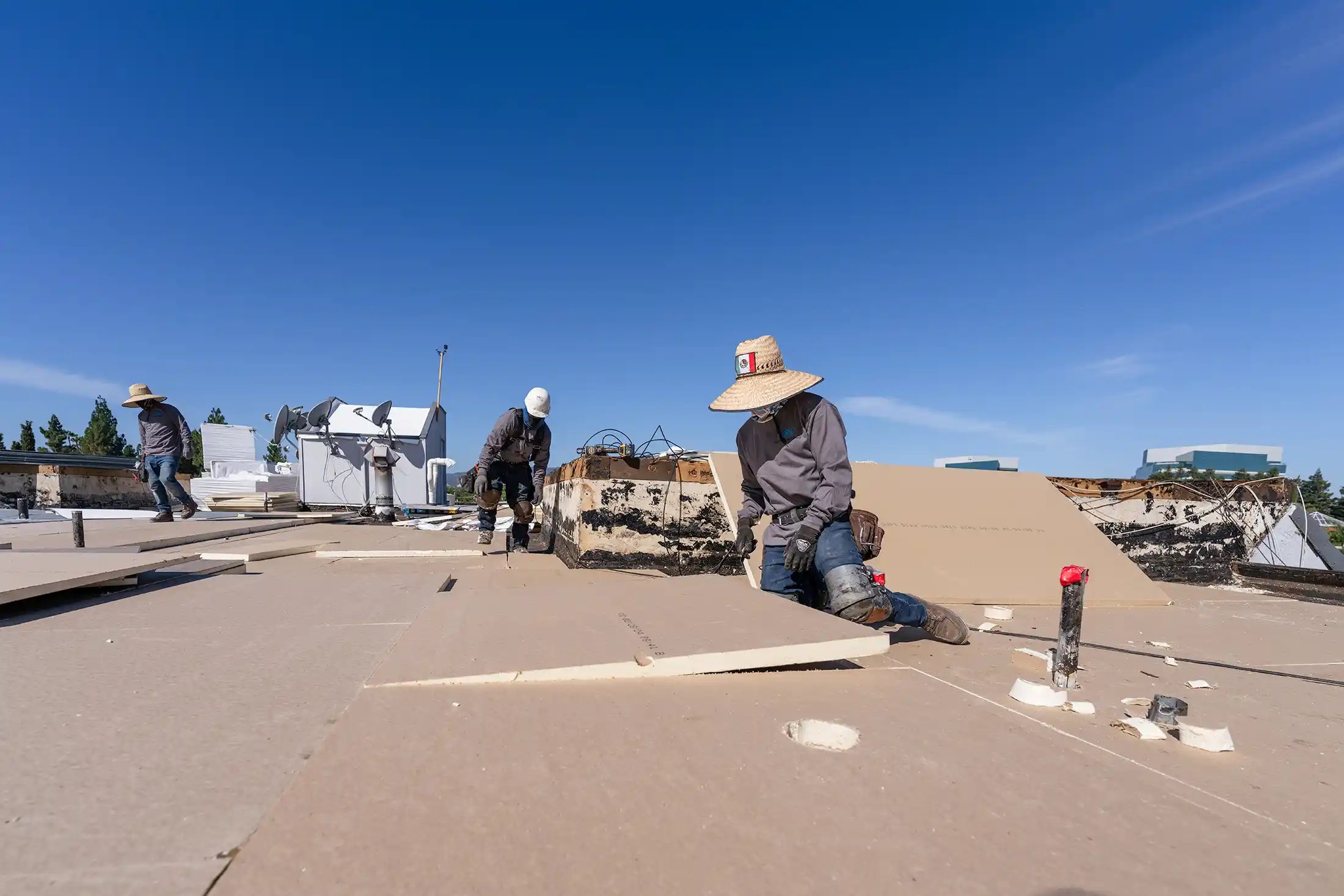
National basics aside, a few California rules genuinely affect flat-roof projects here.
Permits. Walnut Creek, like most California cities, requires a permit for re-roofing on residential and commercial buildings, and applications go through the city's online portal.
Title 24 and cool roofs. The 2025 California Energy Code took effect January 1, 2026, and includes roofing requirements tied to thermal emittance and solar reflectance. Those requirements vary across California's 16 climate zones, so don't assume one rule fits every address. Verify the zone through the CEC tool or your permit department. Cool roofs (high reflectance plus high emittance) can cut cooling costs, though reflectivity isn't the only thing that matters for a comfortable, durable roof.
Fire rating. CAL FIRE recommends a Class A fire-rated roof covering when re-roofing, and the California Department of Insurance's Safer from Wildfires framework treats it as a mitigation feature. That's worth confirming, especially near fire-prone areas.
License verification. The CSLB tells homeowners to check a contractor's license, and California ads must display the license number. Active C-39 roofing contractors also carry workers' comp. Symplify Roofing is fully licensed and insured under CA CSLB License #1108246, and you should feel free to verify that (and any contractor's) before signing anything.
A transparent flat-roof evaluation shouldn't feel like a mystery. Here's what to expect from an honest process, and it's how we approach it at Symplify Roofing.
It usually starts with a satellite or drone review of the roof, which gives an accurate first read without anyone climbing up. From there, good documentation matters: clear photos of the drainage, penetrations, seams, and deck condition, so you can see what the estimator sees. A seasoned roofing professional will walk the entire roof, not just the easy-to-reach corners. You should get a written scope that spells out the roofing system, the attachment method, and how edges and penetrations will be sealed, since a properly sealed seam is where most membrane roofs succeed or fail. Most important, you should get the why behind the recommendation, in plain language.
A few questions worth asking any contractor before you approve a flat-roof job:
Whether you're planning a new flat roof or a full commercial roofing job, you can start with an instant online estimate or request a virtual estimate, whatever's most convenient for you. It's a low-pressure first step: clarity on your options, no commitment to move forward. If you'd rather talk it through, call us at (415) 549-1588.
There isn't a universal best. The right roofing system depends on your slope, drainage, rooftop traffic, sun exposure, code requirements, and install quality. A good contractor matches the system to your roof and explains the reasoning.
Neither is simply "better." TPO roofs offer a smooth surface, reflectivity, and heat-welded seams, while EPDM roofing is a flexible rubber roofing membrane with a long track record and adhesive or tape seams. The better choice depends on your roof's exposure, drainage, and how the single ply membrane will be attached.
Sometimes. Coatings and spray foam work only when the existing roof is sound, dry, well-adhered, and draining properly. If the roof is failing or holding water, a coating tends to seal in the problem rather than solve it.
Brief ponding after rain can happen, but water that sits longer than 48 hours can damage the roof assembly. Persistent ponding usually signals a drainage or slope issue that should be addressed before choosing a flat roof material. Even a low-maintenance membrane needs regular maintenance to reach its full life.
The National Roofing Contractors Association recommends at least twice a year, ideally in spring and fall, plus after severe weather. This kind of minimal maintenance catches small issues, like a lifted seam or a clogged drain, before they become leaks, and it protects the value building owners have invested in their roof.
1 min read
Key Takeaway PVC roofing membranes are single-ply, heat-welded thermoplastic sheets that commonly last 20 to 30 years and excel when a flat or...
1 min read
aKey Takeaway EPDM rubber roofing is a synthetic single-ply membrane designed for flat and low-slope roofs, forming one continuous waterproof layer...
1 min read
ey Takeaway Flat roof repair starts by identifying the actual failure point: seams, flashings, penetrations, drains, ponding areas, or edge metal...