1 min read
7 Roof Replacement Signs Bay Area Owners Should Watch
Key Takeaway Bay Area homeowners should watch for 7 roof replacement signs: recurring leaks, widespread shingle damage, granule loss, sagging...
8 min read
ey Takeaway
Flat roof repair starts by identifying the actual failure point: seams, flashings, penetrations, drains, ponding areas, or edge metal are where most leaks originate. Common flat roof repair methods differ by material, with TPO and PVC requiring heat-welded patches, EPDM needing primer and seam tape, and modified bitumen using asphalt-based patching. If more than 25% of the roof needs work, full membrane replacement is often smarter than repeated repairs.
Maybe you have a fresh water stain spreading across a ceiling. Maybe a roofer just said something like "seam separation" or "wet insulation" and you're not sure if that's real or a sales pitch. Either way, you want a straight answer without the pressure. Here it is: most flat roof leaks start in predictable places, seams, flashings, penetrations, drains and ponding areas, edge metal, or a punctured roof membrane. A good roof repair finds the actual failure point and fixes the cause. A bad one just decorates the roof with more goop and waits for the next rain. This guide is for homeowners and property managers trying to evaluate a repair, and it walks through where flat roofs fail, how the fixes work, and when a full replacement is the smarter call.
.jpg?width=4000&height=3000&name=Copy%20of%20DJI_0663%20(1).jpg)
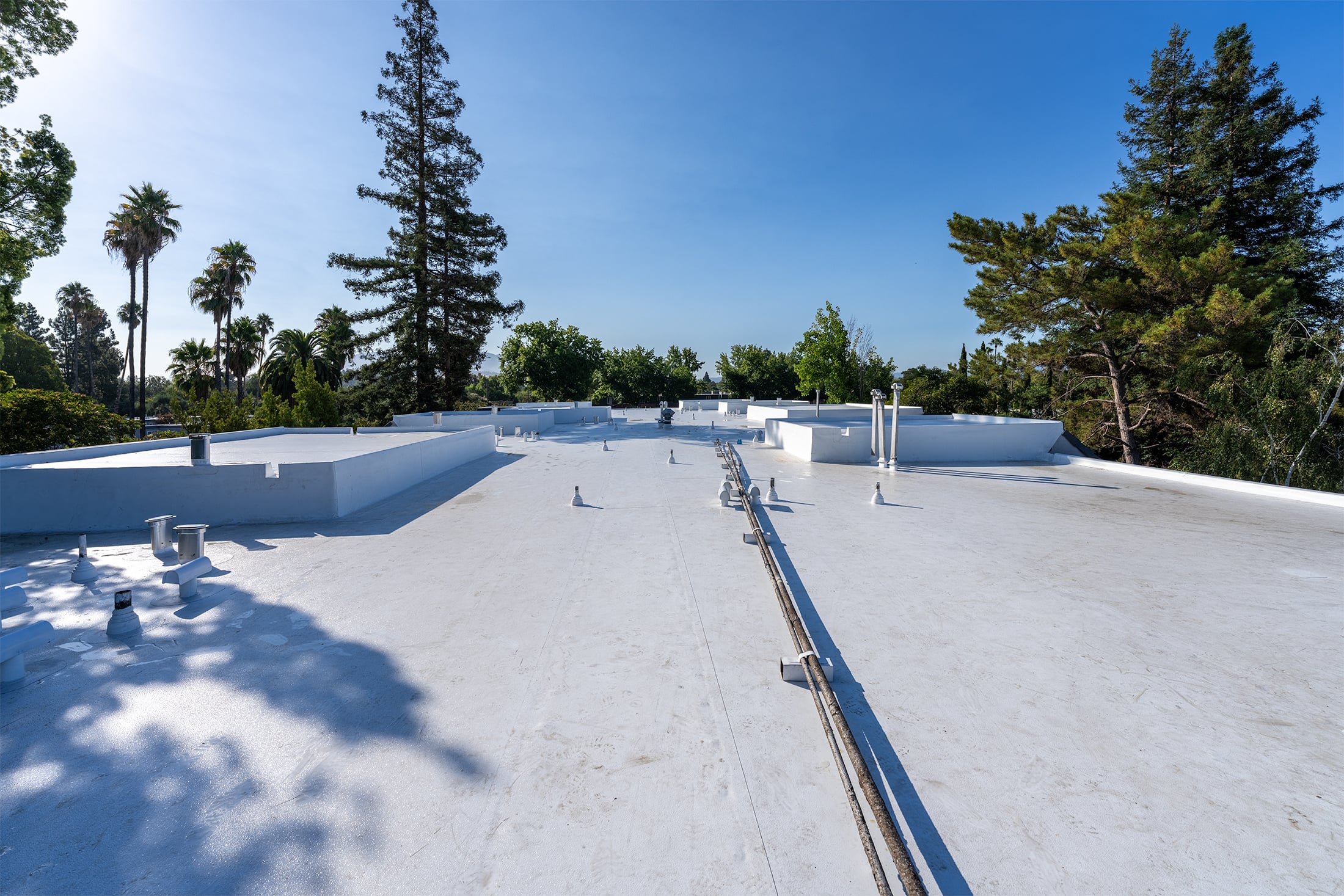
A "flat" roof isn't dead flat. It's low-slope, and it's designed to move water toward drains. The International Building Code calls for many low-slope systems to have at least a 1/4-inch-per-foot slope, or about 2%, so water actually leaves the roof surface. When water sits instead of draining, something is off. Unlike sloped roofs, which shed water by gravity across shingles, a flat roof relies on a tight membrane and working drainage systems to stay dry.
A flat roof is a membrane system, not shingles. The common flat roof systems are EPDM (rubber), TPO, PVC, and modified bitumen roofs or built-up roofing. TPO and PVC are single ply systems, while built-up roofing uses multiple layers. With reasonable care, most last somewhere in the 15 to 25 year range, some longer. Keep that lifespan in mind, because roof age changes whether repair or replacement is the honest answer later on. This is true whether you're dealing with a home addition or a commercial flat roof on a warehouse or storefront.
Ponding water is water that stays on the roof more than 48 hours after rain. It's the source of a huge share of flat roof problems, and it's usually a symptom rather than the disease itself. Standing water is heavy: one inch adds about 5.2 pounds per square foot. Over time that load stresses low spots and speeds up membrane breakdown.
The water accumulation is what you see. The cause is underneath: clogged drains, poor slope with only minimal slope to begin with, compressed insulation, a sagging deck, or blocked scuppers. In the Bay Area, leaves and needles from nearby trees clog drains and gutters fast once the rainy season starts, which turns a slight slope issue into a real pond. Fix the cause and the ponding usually goes away. Patch the roof surface and the water buildup comes right back.
A flat roof fails in the same handful of spots over and over. Here's the quick map of the most common flat roof problems, then a closer look at each below.
| Failure Point | What You See | How It's Fixed |
|---|---|---|
| Seam failure | Open laps, lifted edges, leaks after windy rain | Clean, then heat welding (TPO/PVC) or prime and tape (EPDM) |
| Flashing failures and penetrations | Leaks near vents, HVAC, pipes, parapets | Rebuild flashing detail with compatible membrane |
| Membrane damage | Punctures, cracks, blisters | Clean, dry, patch with matching roofing material |
| Edge metal and clogged drains | Lifted membrane at edges, backed-up drains | Reset edge metal, clear and reflash drains |
Seams are where two sheets of roof membrane join, and they're a top source of flat roof leaks. You'll see open laps, fishmouths (little tented gaps), or lifted edges, often followed by leaks after wind-driven rain pushes water under the seam. Heat and cold make the membrane expand and contract, and that thermal movement, driven by daily temperature fluctuations, wears seams down over years. The fix depends on the material: heat-welded repairs for TPO and PVC, primer and seam tape for EPDM. More on that split below.
Anywhere something pokes through the roof or meets a wall is a high-risk leak spot. Think skylights, vents, HVAC units and their curbs, pipe boots, and parapet walls. Thermal movement and aging materials pull these details apart, and flashing failures are one of the most common reasons a roof that looks fine still leaks. The fix rebuilds the flashing correctly, replaces cracked boots or curb flashing with compatible membrane, and removes any spot where water gets trapped. Solar panels mounts and other rooftop equipment deserve extra attention because they're added after the roof and often flashed poorly.
The membrane itself takes hits. Foot traffic near HVAC service paths causes small punctures and tears, and the more foot traffic a roof sees, the faster that damaged membrane adds up. Constant exposure to sun and UV dries and cracks the surface, and that membrane deterioration accelerates on an aging roof. Blisters are raised bubbles where air or moisture is trapped underneath. The fix cleans and dries the area, then patches with the same or compatible material. With a blister, a good roofer checks whether moisture is trapped before cutting into it. Where people walk repeatedly, walkway pads keep foot traffic from causing the next round of damage.
Perimeter edge metal holds the membrane down at the roof's border. When it lifts or loosens, often from major storms and wind, water gets in and the membrane starts peeling. Drains and scuppers back water up once they're clogged. And old patches or coatings fail when they were slapped over a live problem. The fix resets or replaces edge metal, clears and reflashes clogged drains, and strips off failed patch material so the real issue can be diagnosed. Repeated sealant over the same spot isn't a real repair. It just hides the leak until next season, which is how minor repairs turn into costly repairs down the line.
Water travels. The water stains and stained ceiling tiles almost never sit directly under where the roof leaks, because water runs along the deck before it drips inside. That's why chasing the interior spot leads nowhere. Signs the assembly under the membrane is soaked: soft spots underfoot, recurring water intrusion in the same area, a musty smell, bubbling that keeps coming back, and spreading water stains. Wet insulation beneath the membrane and soaked decking have to be removed and replaced before any membrane repair, and left alone they turn into structural damage. A patch over a soaked assembly fails, and the trapped moisture keeps working. The EPA notes that wet interior materials should dry within 24 to 48 hours to limit mold growth, so timing matters once water gets inside.
A real professional inspection follows a sequence instead of guessing:
This is where our approach at Symplify Roofing shows up. We use drone and satellite-assisted review to see the whole roofing system, offer virtual estimates so you don't lose a workday, and document what we find with photos so you can see the failure point yourself. You get step-by-step communication instead of silence, and a plain-English explanation of what's actually wrong. That transparent repair process is the point of the whole thing.
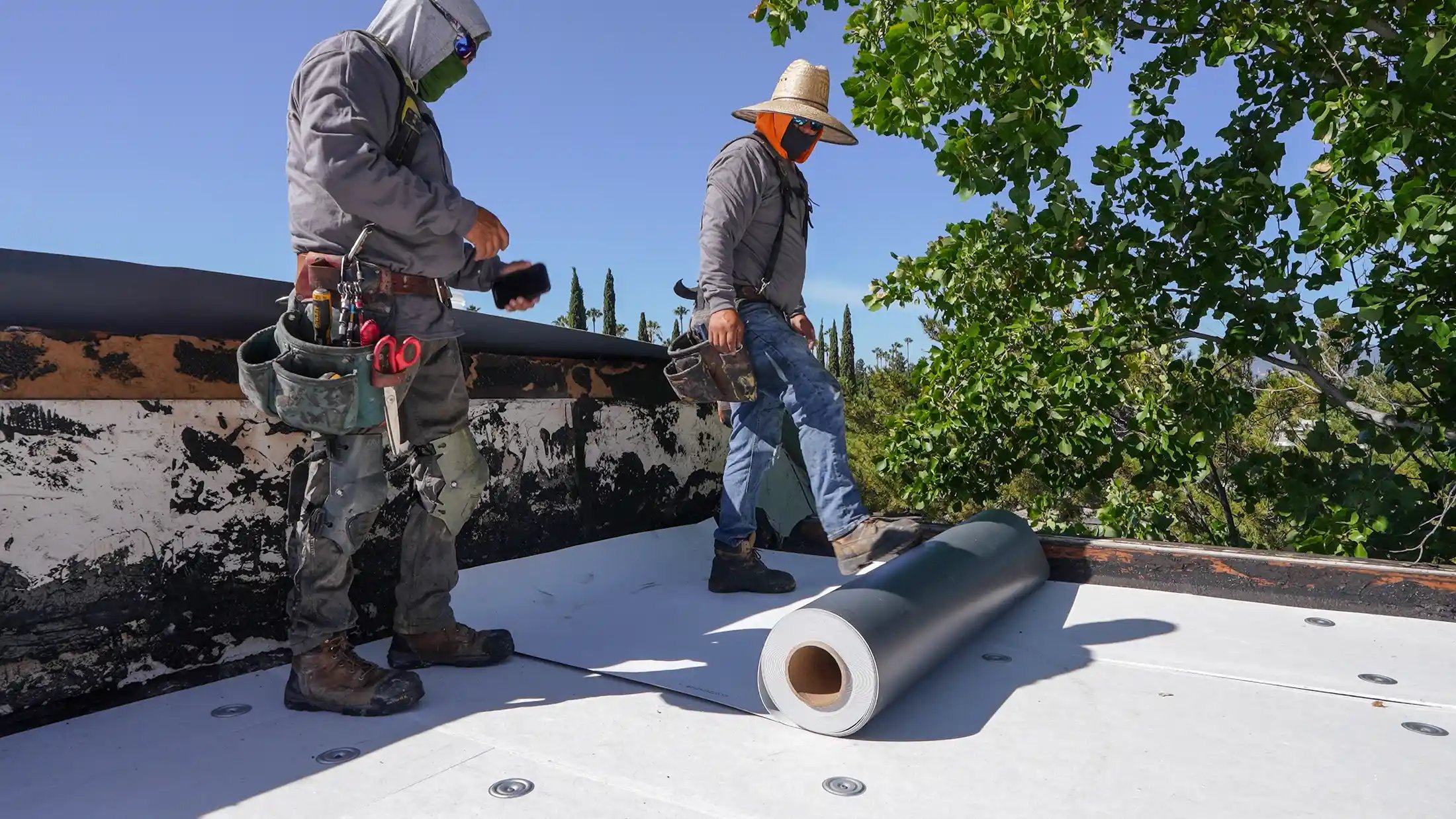
The single most important rule in flat roof repair: the patch material must be compatible with the existing membrane. Mismatched repair methods fail early, sometimes within a season, and using the wrong products can even void manufacturer warranties. Here's how the main systems differ, and where a small repair ends and membrane replacement begins.
These are thermoplastic membranes, and repairs are heat-welded. The roof surface is cleaned and dried, a patch or seam repair is welded on with a heat gun or automatic welder, then the weld cools and gets probed to confirm the bond held. That verification step is the difference between a repair that lasts and one that quietly reopens. Manufacturer-compatible materials only.
EPDM is rubber, and it isn't welded. Repairs use a cleaned surface, primer, seam or cover tape or a patch, rolled firmly for adhesion, with lap sealant where the manufacturer calls for it. A cover strip adds an additional waterproof layer over a repaired seam. Different chemistry than TPO, and the two aren't interchangeable. A TPO patch on an EPDM roof won't hold.
Modified bitumen roofs and built-up roofs get compatible asphalt-based patching and reinforcement, plus attention to blisters and failed laps. Coatings deserve a reality check. Liquid and silicone coatings can reinforce and seal small cracks and may extend a roof's life by 10 to 15 years, but only on a dry, sound, compatible substrate. A reflective coating can also reduce heat absorption on the roof surface, cutting some of the daytime heat gain. They do not fix wet insulation, bad slope, failed seams, or a sagging deck. When damage is that widespread, membrane replacement is the real answer, not a coating. Coating over a live leak is not a repair.
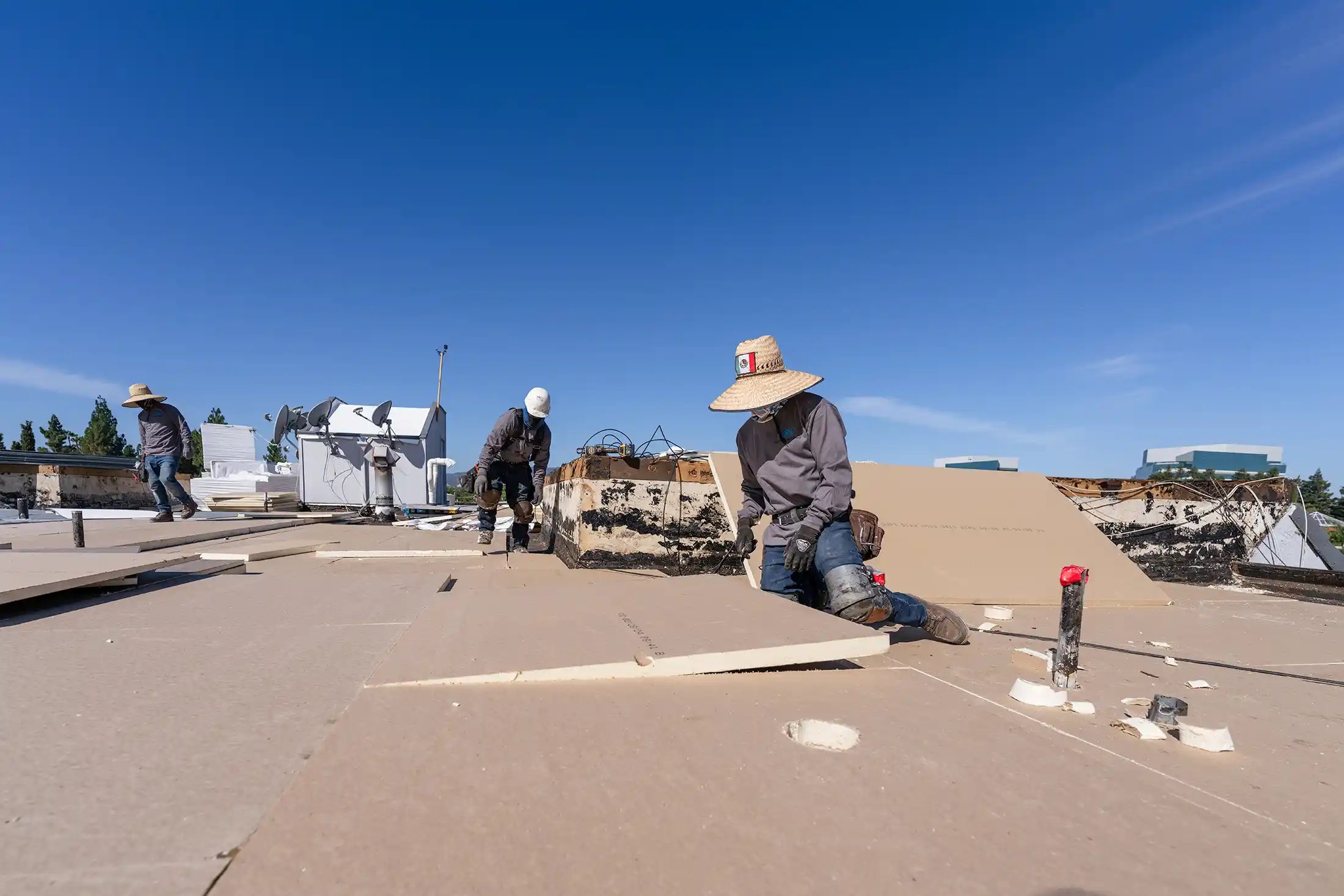
Nobody wants to be talked into a full replacement they didn't need. Two rough guidelines help. If more than about 25% of the entire roof needs work, replacing the membrane often makes more sense than piecemeal repairs. And if a repair costs more than roughly 30% of what a full roof replacement would run, replacing is usually the smarter money. Sometimes drainage improvements, like adding tapered insulation to restore proper drainage, solve chronic ponding without touching the whole roof.
Repair usually makes sense when:
A roof replacement is the honest answer when:
We won't quote a dollar figure here, because honest pricing depends on your actual roof. For real numbers, our instant online estimate is 95% accurate, with a short drone visit to confirm. The real waste isn't spending on a proper professional repair. It's the cheap patch that fails next rain.
A few things matter if your roof is here. Verify any roofer's license through the California Contractors State License Board; roofing falls under the C-39 classification, and we're licensed in California as CSLB #1108246. New roof coverings and reroofing generally require a permit, and Walnut Creek's applications must meet the 2025 California Building Code as of January 1, 2026, so confirm repair-specific requirements with your local building department. CAL FIRE recommends keeping roofs and gutters clear of leaves and debris, which also protects your drainage systems from clogging. Schedule routine inspections so timely repairs happen before small problems grow. If insurance is involved, document the damage, review your policy, and contact your insurance company. A licensed contractor can explain the roof conditions, but that isn't insurance or legal advice. This applies to homes and commercial buildings alike.
You don't have to guess at what's wrong or gamble on a patch, and this is not the moment for DIY repairs on a system you can't fully see. Start with our instant online estimate, request a virtual estimate, or call us at 415-549-1588. It's a low-commitment first step: you'll get a clear look at the failure point, photos of what we find, and an honest read on whether repair or membrane replacement makes more sense. Our repair services cover residential and commercial flat roof work, TPO, gutters, and inspections across the Bay Area from our Walnut Creek office.
Seams and flashing failures top the list, along with clogged drains and ponding areas. Water tends to find the joints, edges, and penetrations first, which is why a repair should start with a professional inspection to identify the exact failure point.
More than 48 hours after rain counts as ponding water. Beyond adding weight (about 5.2 pounds per square foot per inch), standing water speeds up membrane breakdown and usually points to a drainage or slope problem that blocks proper water flow underneath.
Only in limited cases. Coatings can seal small cracks and add years on a dry, sound, compatible roof surface. They won't fix wet insulation, failed seams, bad slope, or a sagging deck. Coating over a live leak just hides it, and widespread membrane damage usually calls for replacement instead.
Usually because the repair covered the symptom, not the cause, or used incompatible material. Wet insulation left in place, unaddressed drainage issues, or a patch that doesn't bond to your roof membrane will all keep leaking.
New roof coverings and reroofing generally require a permit, and Walnut Creek follows the 2025 California Building Code as of January 1, 2026. Small repairs vary, so confirm the specifics with your local building department or a licensed contractor.
1 min read
Key Takeaway Bay Area homeowners should watch for 7 roof replacement signs: recurring leaks, widespread shingle damage, granule loss, sagging...

1 min read
Key Takeaway: The 25% rule in roofing guides decisions on whether to repair or replace a roof based on damage extent, impacting cost and longevity....
1 min read
Key Takeaway The 7 best roof replacement options for Bay Area homes are architectural asphalt shingles, standing seam metal, clay tile, concrete...