1 min read
7 Best Roof Replacement Options for Bay Area Homes
Key Takeaway The 7 best roof replacement options for Bay Area homes are architectural asphalt shingles, standing seam metal, clay tile, concrete...
11 min read
Key Takeaway
Clay and concrete tile roofs offer exceptional longevity, with clay tiles lasting 75 to 100+ years and concrete tiles commonly lasting 50 to 100 years, making them among the most durable roofing materials available. Both achieve a Class A fire rating and require minimal maintenance, but their real lifespan depends on the underlayment, flashing, and installation quality beneath the tiles. Tile is heavy and needs a structural review before installation, especially for homes switching from asphalt shingles.
Tile roofs sound simple until you start hearing 50 years, 100 years, underlayment, structural load, permits, and fire ratings tossed around in the same conversation. Here's the short version: clay and concrete tile roofs are long-lasting, fire resistant systems, but they only perform as well as the underlayment, flashing, fastening, and structure beneath them. Clay tiles generally last the longest and hold their color best. Concrete tiles are more flexible in style and more widely used. Both are heavy, both need skilled installation, and both reward a little upfront homework.
If you're a homeowner weighing a tile roof and feeling a bit overwhelmed by the numbers, this is for you. We'll walk through clay versus concrete, the honest pros and cons, how long these roofs really last, and what to check before you commit. Each of these roofing materials has its own advantages, and knowing them helps you choose well.
Both clay and concrete tiles are premium roofing materials known for long service life and low maintenance. The quick differences come down to color, weight, and flexibility of design.
| Factor | Clay Tile | Concrete Tile |
|---|---|---|
| Typical longevity | 75 to 100+ years | 50 to 100 years |
| Appearance / color retention | Color baked through; holds consistently over decades | Wider color and shape range; surface color can fade over 15 to 20 years |
| Weight | Heavy, but often lighter than concrete tiles | Heavy, frequently heavier than clay |
| Maintenance | Low maintenance; less upkeep over time | Low maintenance, but may need coating refreshed and algae watched |
| Best fit | Long-term color permanence, classic Mediterranean look | Style flexibility, mimicking slate or wood shakes |
One thing worth saying before you read another word: the roofing material you pick matters less than how well it gets installed.
Clay roof tiles are made from natural clay or shale, shaped and then kiln-fired at high heat. That firing is the heart of clay tile manufacturing, and it's what gives fired clay its strength and its color, which is baked all the way through rather than painted on. So a traditional clay tile doesn't really fade or degrade from age alone. It looks much the same in year 40 as it did on day one.
The aesthetic appeal is the draw for a lot of homeowners. Clay tiles carry a timeless curb appeal that suits Mediterranean, Spanish, and Mission-style homes, and they tend to add curb appeal that buyers notice. Barrel tiles are a classic profile you'll spot on many of these homes. In U.S. standards, clay roof tiles are governed by ASTM C1167-22, and Grade 1 tiles are made for severe frost resistance, which means they're rated for use in any region.
Natural clay is highly resistant to water absorption and fire, and it's naturally resistant to rot and pests. Clay tiles are strong underfoot in the sense that they won't rot or rust, but they are brittle. Careless foot traffic or a hard impact can produce cracked tiles, which is why walking a clay tile roof is a job for someone who knows how. Because color runs through the body of the material, even individual tiles that get chipped tend to keep looking consistent with the rest of the roof.
Concrete roof tiles are made from a cementitious mix, usually portland cement, sand, aggregates, and sometimes fly ash, then molded or extruded into shape. That manufacturing process gives makers a much wider range of profiles, colors, and shapes. Concrete tiles can be made to mimic clay, slate, or even wood shake, which gives you more design options if you're chasing a specific architectural style.
Concrete roof tile is governed by ASTM C1492-22. The key difference from clay is the color. On most concrete tiles, color is applied as a surface coating rather than fired all the way through. That coating can weather over time, and colors may soften or fade over roughly 15 to 20 years. Many concrete tiles can have their coating refreshed around that same interval to restore appearance.
The abundant materials behind concrete help availability. The tradeoff is weight. Concrete tiles are often heavier than clay, which sets up a conversation about your home's structure that we'll get to shortly.
Tile earns its reputation. Here's where clay and concrete tiles genuinely shine.
Both clay and concrete tiles outlast most other roofing materials by a wide margin. That superior durability and extended service life are a big part of why homeowners consider tile worth the investment, and why a well-built tile roof can serve for generations.
Clay and concrete tiles can achieve a Class A fire rating, the highest attainable fire classification for both the product and the installed system. Being fire resistant matters a great deal in California. One honest caveat: fire resistant is not fireproof. Tile dramatically reduces roof ignition risk, but no roof makes a home immune to wildfire.
Concrete and clay both have real thermal mass, and the airspace around each individually installed roof tile creates a form of natural insulation that helps moderate indoor temperatures. That thermal mass slows heat transfer into your attic, so an energy efficient tile roof can contribute to better energy efficiency during long, hot afternoons, reducing cooling loads in warmer Bay Area microclimates. We say can, not will, because actual savings depend on your home, insulation, and habits.
Clay tiles excel at resisting rot, insects, and extreme heat. Concrete tiles hold up well against the same slow forces. Neither will feed pests or absorb much water, which spares you a whole category of problems that plague organic roofing materials.
Tile simply looks good, and the aesthetic appeal reads as quality to buyers. Homes with clay roof tiles tend to attract attention and can sell more readily because the roof signals a serious, lasting investment. Compared with synthetic materials that imitate the look, real tile carries a permanence buyers can feel.
Because clay and concrete tiles last so long and can often be reused or recycled, they're a strong fit for many California and Bay Area homes, provided they're installed correctly. That last part is not a throwaway line.
We'd rather you hear the drawbacks from us than discover them later.
It's a heavy roofing system. This is the big one. Tile weight can require structural reinforcement, especially on older homes or homes switching from asphalt shingles. More on that in the structure section below.
Installation is complex. Tile is not a material you hand to just anyone. Proper installation with proper techniques is the whole ballgame, and improper installation from a rushed or inexperienced crew can undo the value of an expensive roof.
Tiles can crack. Clay and concrete tiles are both fragile under careless foot traffic, and concrete tiles can crack from direct impact or large hail. Broken tiles are usually a localized fix, but they need attention when they happen.
The underlayment often fails first. The waterproofing layer beneath your tiles typically wears out long before the tiles do. Ignore it and even a beautiful tile roof can leak. We'll unpack this next because it's the point most articles skip.
Repairs need matching tiles and skilled hands. Sourcing tile that matches an older roof can be tricky, and replacing cracked tiles should be done by roofers who know tile systems.
Slope matters. Tile isn't suited to very low slopes, so it's not right for every roof.
Concrete tiles need a little more upkeep. Concrete tiles can attract algae growth and may need occasional cleaning plus the coating reapplied roughly every 15 to 20 years.
Solar adds coordination. If you have or plan to add solar panels, the remove-and-reinstall work needs to be planned around the roof.
Yes, both clay and concrete tiles carry higher installation costs than asphalt shingles. We won't quote numbers here, and we'd gently push back on treating price as the deciding factor. Choosing the cheapest bid on a roof this long-lived is usually where regret starts. The value is in the decades of service, not the sticker.
Here's the qualified answer. Clay tile roofs commonly last 75 to 100 years or more when properly installed and maintained, and clay doesn't degrade from age alone. Concrete tile roofs are often discussed around 50 years and up, with real variation by product, climate, and installation. In harsh conditions like South Florida, concrete tiles may land closer to 50 to 75. InterNACHI's inspection-industry life-expectancy chart lists clay and concrete tile roofs at 100+ years, and many manufacturers offer warranties of 50 years or more. Treat those as general expectations, not guarantees for every roof.
Now the part that changes how you should think about all of this. Tile life is not the same as roof-system life. The visible tiles can easily outlast the underlayment, flashing, and fasteners underneath them. So a roof marketed as a "100-year roof" describes the tiles, not the entire assembly. The waterproofing layer beneath will almost certainly need attention long before the tiles are done.
Climate, installation quality, maintenance, and your home's structure all push the real number up or down. A perfectly made tile roof in a mild climate that gets its underlayment refreshed on schedule can serve for generations. A rushed install with poor flashing can fail in a fraction of that time, no matter how good the tiles are.
This is the section most guides gloss over, and it's the one that actually determines how long your roof keeps water out.
Tile is a water-shedding assembly, not a waterproof membrane. The tiles direct the vast majority of water off your roof, but they don't seal it. In wind-driven or heavy rain, and anywhere flashing details are weak, water can migrate underneath. That's why the underlayment beneath the tile is the true waterproofing layer. It does the quiet, unglamorous work of keeping your home dry.
Building code reflects how important slope and underlayment are to this. Under the International Residential Code, clay and concrete tiles must be installed on roof slopes of 2.5:12 or greater. From 2.5:12 up to 4:12, a double layer of underlayment is required. At 4:12 or greater, a single layer is allowed under the prescriptive path.
Flashing is the other half of the story. Valleys, walls, chimneys, skylights, and vent penetrations are where most tile roof leaks actually start. Good flashing detail is the difference between a roof that ages gracefully and one that quietly rots the roof deck beneath it.
Here's the practical takeaway: underlayment often needs replacement around 25 to 30 years, even when the tiles themselves are perfectly fine. So a long-lived tile roof may need one or more underlayment refreshes across its life. This is exactly where a careful, photo-documented inspection earns its keep. You want to know the condition of the parts you can't see, not just the parts you can.
Weight is the question that catches homeowners off guard, so let's keep it plain. The Tile Roofing Industry Alliance defines standard-weight roof tile as tile with an installed weight of 9 lb per square foot or greater, and that's before you add anything else. Tile thickness typically ranges from 3/8 inch to 1.5 inches, and a single roofing square can hold anywhere from 75 to more than 400 pieces depending on tile size and exposure.
Weight is product-specific, and the spread is real. As examples only, one clay tile product lists roughly 598 to 676 lb per square, while one concrete tile specification lists about 930 lb per square. Don't read those as universal figures for all clay or all concrete tiles. Read them as proof that you need to know your exact product before anyone can judge whether your framing and load bearing walls can carry the load, whether you measure it per square foot or per full roofing square. And the tile is only part of the load. Underlayment, fasteners, accessories, and hip and ridge treatments all add weight too.
If your home currently has asphalt shingles, or if it's an older house, don't assume the roof structure is ready for tile just because the new roof "looks similar." Framing that comfortably carries shingles may need structural reinforcement to carry the heavier weight per square foot of concrete and clay tiles. A professional structural assessment before you commit is the honest, sensible move, and it protects both your home and your investment.
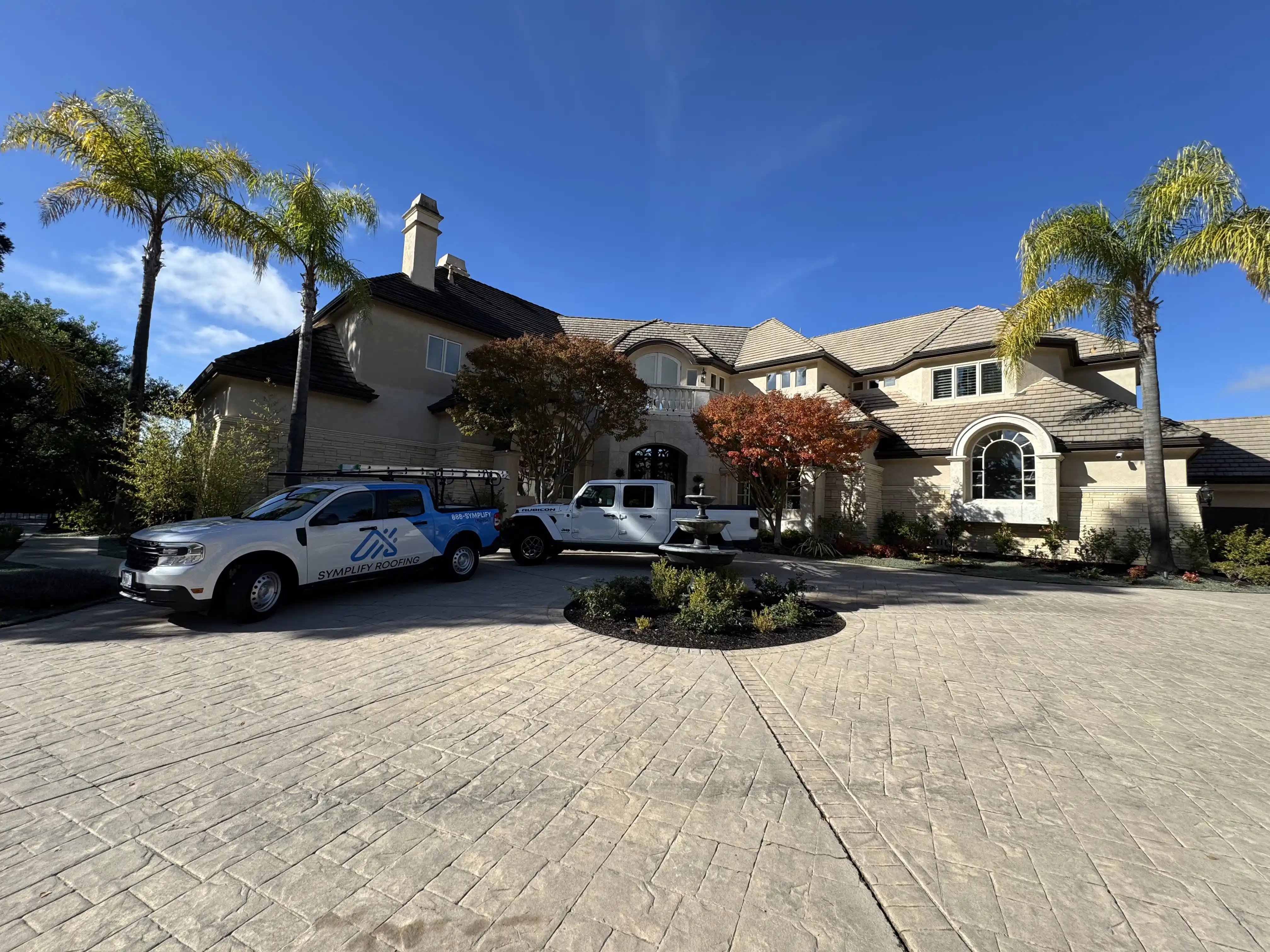
For a lot of Bay Area homes, tile is a strong fit. The Class A fire resistance is meaningful in wildfire-prone zones, the material handles heavy sun exposure well, and the look suits the region's Mediterranean and Spanish-style architecture.
California requires roof coverings and assemblies to be Class A rated, and CAL FIRE lists tile among common Class A options. So clay and concrete tiles line up naturally with the state's fire-hardening expectations. On wind resistance and impact, TRIA notes that properly installed concrete and clay tile systems have been designed and tested to withstand high winds up to 200 mph in the context of Florida's High-Velocity Hurricane Zone, and many products are tested to resist a 2-inch hailstone. Read those as test and design context, not a blanket warranty for your specific roof.
Then there's the local paperwork. In Walnut Creek, you need a re-roofing permit before applying a new roof covering, and an in-progress inspection is required during installation. The 2025 California Building Standards Code became effective January 1, 2026, and Walnut Creek permits must comply from that date. The California Energy Code also triggers roofing-product requirements when more than 50% of the roof is being replaced, and those rules tie into the energy efficiency goals baked into the state code. Because climate zone, slope, and exceptions all affect what applies, the right move is to check current local code and permit requirements for your address.
One more local note: marine air and salt air in parts of the region, plus debris from mature trees, mean your gutters and valleys need regular attention. Bay Area homes vary widely in age, slope, and structure, so a local inspection beats any assumption.
There's no universal winner, and we won't pretend otherwise. Clay tiles excel at maximum longevity, color retention, and low maintenance over the long haul. Concrete tiles win on flexibility: more profiles, a wider color and design range, and broad availability, including the ability to imitate clay, slate, or shake.
Which is better depends entirely on your home. Its structure, roof slope, complexity, your aesthetic goals, and local code all steer the answer. A home that can't easily carry the heaviest concrete profiles might point toward clay tiles. A homeowner chasing a specific look on a budget-conscious project might land on concrete tiles. Both concrete and clay bring plenty to the table, so the honest path here is inspection first, blanket claims never. You're an informed adult, and this decision deserves real information about your roof, not a slogan.
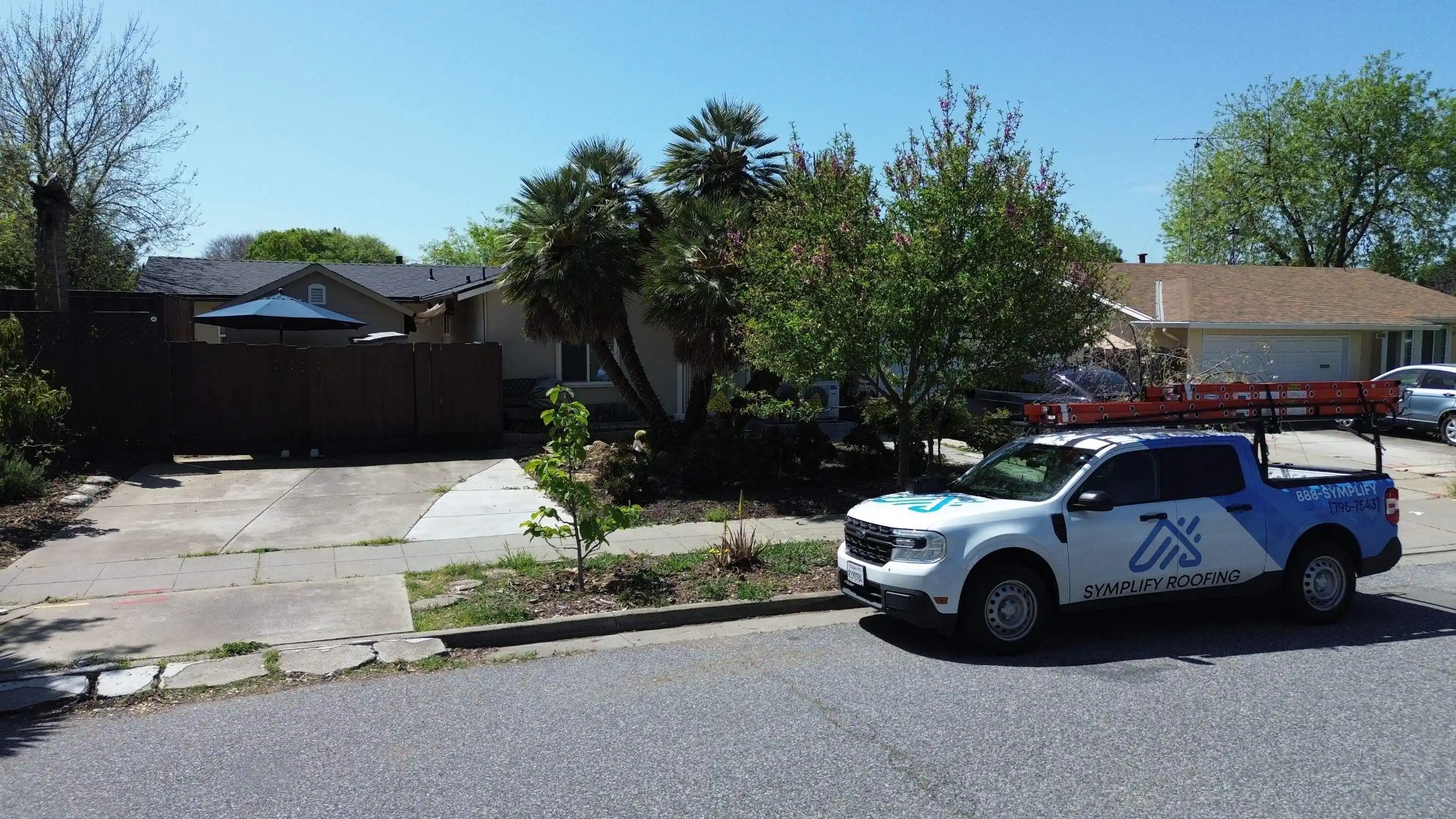
A leak or a cracked tile doesn't automatically mean a whole new roof. Here's how to think about it.
Not sure where you land? Our 30-second repair-versus-replace quiz is a low-pressure way to get pointed in the right direction before anyone climbs on your roof.
Bring these questions to any professional roofer. Their answers tell you a lot.

A tile roof is a long commitment, and the process of getting one shouldn't leave you guessing. We built Symplify Roofing because the roofing industry's slow crawl toward modern tools was hurting customers, not just annoying them. So we do it differently.
You can start with an instant online estimate that's 95% accurate, no phone tag required. We confirm the details with a drone and satellite review, and a virtual consultation means you don't have to take a day off work. Throughout the project we keep you updated every step of the way, with photo-documented work so you can see the underlayment, flashing, and fastening that most homeowners never get to check. We're fully licensed and insured under CA CSLB License #1108246.
Whatever's most convenient for you: get an instant quote online, request a virtual estimate, or call us at (415) 549-1588. No pressure, just a clear, honest starting point.
Clay tile roofs commonly last 75 to 100 years or more when properly installed and maintained, and some inspection references list 100+ years. The clay tiles themselves rarely fail from age; the underlayment beneath them usually needs replacement first, often around 25 to 30 years.
Concrete tile roofs are often discussed around 50 years and up, with real variation by product, climate, and installation. Many manufacturers offer warranties of 50 years or more, which is a general expectation rather than a guarantee for every roof.
Yes, and it's critical. Clay and concrete tiles shed water but aren't a waterproof membrane, so the underlayment is the true waterproofing layer. Code even requires a double layer on lower slopes between 2.5:12 and 4:12.
Maybe, but don't assume. Tile is heavy, standard-weight tile starts at 9 lb per square foot, and weights vary widely by product. Older homes or homes switching from asphalt shingles often need a structural review before committing.
For many homes, yes. Clay and concrete tiles can achieve a Class A fire rating, which lines up with California's requirements, and they suit the region's sun and architecture. Just plan for a Walnut Creek re-roofing permit, an in-progress inspection, and current 2025 code compliance.
1 min read
Key Takeaway The 7 best roof replacement options for Bay Area homes are architectural asphalt shingles, standing seam metal, clay tile, concrete...
1 min read
Key Takeaway: Most insurers may cover a 20 year-old roof, but coverage is often limited and heavily dependent on the results of recent roof...
1 min read
Many homeowners ask the same important question when their roof reaches the end of its life, can I install a new roof over my existing roof. It is a...